

Ricardo Scofidio, the pioneering architect whose conceptual approach transformed modern museum design across the United States, passed away on Thursday at the age of 89. His death was announced by Diller Scofidio + Renfro (DS+R), the world-renowned firm he co-founded in 1997 with his wife, Elizabeth Diller, alongside partner Charles Renfro.
Over his decades-long career, Scofidio helped redefine civic and cultural landscapes. While DS+R executed prominent non-museum works—including New York City’s High Line, the $1 billion redesign of Lincoln Center, and the futuristic Blur Building in Switzerland—it was their landmark museum spaces that left the most enduring mark on public life.
From Academic Conceptualism to Architectural Iconography
Born in 1935, Scofidio grew up in a family with complex racial dynamics that led him to recall being told as a child “to be invisible.” However, his architectural trajectory ensured he would become a central figure in contemporary design. After studying at Cooper Union and Columbia University, Scofidio began teaching at Cooper Union in 1965. There, he met Elizabeth Diller, a former student who became his collaborator and, in 1989, his second wife.
The pair initially gained acclaim for bridging architecture with theory, art installations, and performance. In 1999, Scofidio and Diller made history as the first architects to receive a MacArthur “Genius” grant. Their conceptual mastery was so celebrated that the Whitney Museum featured their work in a dedicated survey in 2003.
Redefining the Museum Experience
The firm’s transition into major museum construction took off with the 2006 opening of the Institute of Contemporary Art (ICA) in Boston—the first new museum built in the city in a century. Featuring a dramatic cantilevered body jutting over Boston Harbor, the building established the firm’s signature aesthetic: bold, sleek, and minimalist without feeling cold.
This victory inaugurated a prolific era of museum projects worldwide, including:
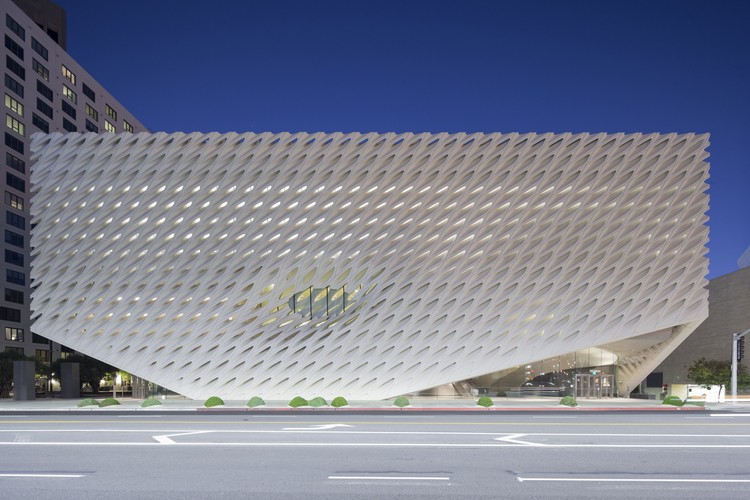
- The Broad (Los Angeles, 2015): Known for its striking honeycomb-like concrete and steel veil, the private museum sparked intense debate among critics while immediately becoming a major cultural landmark.
- Museum of Modern Art Expansion (New York, 2019): A widely praised $450 million renovation that seamlessly integrated 47,000 square feet of gallery space, enhancing flow and allowing for far more ambitious multi-disciplinary programming.
- Global Endeavors: Other major museum commissions included the Berkeley Art Museum and Pacific Film Archive, the Victoria & Albert Museum in London, and the Art Gallery of Nova Scotia in Canada.
Scofidio’s work consistently challenged how audiences experience cultural spaces. Decades before redesigning MoMA, Scofidio and Diller created a 1989 installation at the museum titled para-site, using surveillance feeds to disrupt visitors’ spatial perspectives. Throughout his life and career, Scofidio continually asked an essential question about the discipline: in a world of rapid change, why should architecture sit still?